
The Royal United Services Institute (RUSI) and Forum Europe are hosting an interactive discussion in Brussels on new research into how European countries manage high-risk ICT vendors in the public sector and critical national infrastructure.
Five years after the height of debates on banning specific vendors from 5G infrastructure, Europe continues to grapple with how to manage risks associated with so-called ‘high-risk information and communications technology (ICT) vendors’, particularly Chinese organisations that have been restricted or excluded from networks in multiple European countries on national security grounds. Although the EU has launched a range of initiatives, a cross-European approach to managing high-risk vendors has been undermined by inconsistent national implementation. In January 2025, Henna Virkkunen, the EU Commission’s executive vice-president for tech sovereignty, security and democracy, emphasised that ‘the current situation with regards to the 5G Toolbox implementation by Member States is not satisfactory.’
Reports suggest the EU intends to look beyond 5G by creating an ICT Supply Chain Toolbox. However, implementing another toolbox still leaves European technology supply chains vulnerable to the exact patchy implementation that has beset the 5G toolbox and other cybersecurity initiatives.
In 2025, RUSI’s Cyber and Tech research group conducted research across three European countries – Germany, Spain, and the UK – to better understand national approaches to managing high-risk ICT vendors. The purpose of the research was to identify inconsistencies and challenges in designing and implementing effective legislation, regulation, and risk management frameworks, and to assess what this reveals about Europe’s broader security posture and supply chain dependencies.
To discuss findings from research based on more than 30 interviews, RUSI and Forum Europe are bringing together policymakers and industry stakeholders for a one-off event in Brussels. The event will discuss the trade-offs between security and cost in the public sector; the challenges of aligning national policies with EU-level initiatives; and the implications for Europe’s relationship with large technology vendors. The session will be held under the Chatham House Rule to enable a frank and forward-looking conversation.
 Kimmo Koski, Managing Director, CSC – IT Center for Science
 Dr. Kimmo Koski started at CSC in August 2004 with a mission to support Finnish research providing world-class e-infrastructure and related services. This include investments in national resources and active participation in European initiatives. The most recent example is the eco-efficient datacenter hosting the LUMI EuroHPC pre-exascale system, which is currently the most powerful computer in Europe according to the TOP500 list and one of the major resources for AI driven computing.
Koski has been involved in various European and global collaborations in high-performance computing, data management, networks and cloud activities. Examples include EU initiatives, such as EuroHPC, EUDAT, EOSC and PRACE.
Increasing focus for his activities is how to promote the development of the balanced HPC Ecosystem including different kind of computing elements, AI, quantum and data analytics – in addition to the main asset, namely competent people.
 Alessandra Poggiani, Director General, Cineca
 Alessandra Poggiani is Director General of Cineca.
She has more than twenty years of experience in the field of technological innovation and has collaborated with Italian web pioneers since the early days. She has been dealing with innovation in the public sector for over 20 years and has solid experience in the management of government-owned and in-house companies.
She has been Administrative Director of Human Technopole, CEO and Managing Director of Venis s.p.a., Director General of the Agency for Digital Italy (AGID), CEO of Lait s.p.a., Head of Communication, Advocacy and External Relations of WWF International for the Mediterranean Program Office, Head of Corporate Online Communication of Enel s.p.a., and Head of Information of the Support and Monitoring Unit of the Euro-Mediterranean Partnership for the Environment.
She has always combined her professional work with academic positions, including Adjunct Professor of Business Communication and Innovation Marketing at the Faculty of Economics, Roma Tre University, Visiting Lecturer in Digital Economics at the Business School of Imperial College London and Lecturer in Digital Communication Marketing and New Media Interfaces at the University of Rome La Sapienza, Lecturer of Digital Transformation for the Public Administration at the Business School of ca Foscari University of Venice.
She participates in several industry committees, including the Digital Economy Commission of the Italian section of the International Chamber of Commerce ICC (since 2016), the Advisory Board of “Digital Italy of the Innovation Group (since 2016) and the Innovation Board of the Ca’ Foscari Foundation (since 2017).
Over the years, he has led and supervised several consulting and research projects about digital economy, collaborative innovation and new consumer behaviors and she is also the author of numerous articles and publications on the topics of digital transformation and public economy.
 Valeriu Codreanu, Head of High-Performance Computing and Visualization, SURF
 Valeriu studied Electrical Engineering and got his MSc at the Polytechnic University of Bucharest. He followed-up with a PhD in Computer Architecture at the same institute, graduating in 2011 after a research stay at TU Delft. Valeriu continued as a researcher at Eindhoven University of Technology and University of Groningen, working on GPU computing, computer vision, and embedded systems. In 2014, he joined SURFsara as an HPC consultant and in 2016 became the PI of an Intel Parallel Computing Center project on ‘Scaling up Deep Learning’, subsequently leading the Machine Learning team at SURF. Valeriu is currently leading the High-Performance Computing and Visualization activities at SURF, responsible for the Dutch National Supercomputing infrastructure, while also supporting SURF’s participation in consortiums such as LUMI or Jules Verne
 Utz-Uwe Haus, Distinguished Technologist, Head of HPE HPC/AI EMEA Research Lab, HPE
 Utz-Uwe Haus studied mathematics and computer science at the Technical University of Berlin (TU Berlin) and holds a doctorate in mathematics from the University of Magdeburg (Germany). He worked on nonstandard applications of mathematical optimization in chemical engineering, material science, and systems biology. After five years as senior researcher at the Department of Mathematics of ETH Zürich, he co-founded CERL, the CRAY EMEA Research Lab in 2015, which he transformed into the EMEA part of Hewlett Packard Labs.
His current interests focus on enabling middleware for sustainable and secure usage of HPC/AI systems and digital twins.
 Irena Bednarich, Vice President, International Government Relations, EMEA, APJ, LATAM, HPE
 Irena Bednarich is the Vice President of International Government Relations APJ, EMEA and LATAM at Hewlett Packard Enterprise. In this role, she leads HPE’s government relations and public policy team in these regions and supports key public sector pursuits across EMEA.
After 14 years in Brussels, Irena has recently relocated to Dubai, UAE, to drive stronger alignment with the business in an important growth region. Irena is fluent in Italian, Slovenian, French, English and German and has working knowledge of Spanish.
Discover the main topics that will shape our discussions:
The effectiveness of initiatives like the 5G Toolbox — and a potential ICT Supply Chain Toolbox — and the challenges created by inconsistent national implementation.
Insights from Germany, Spain and the UK on how different legislative, regulatory and risk-management frameworks shape the handling of high-risk ICT vendors.
How public-sector decision-makers navigate the trade-offs between stronger security requirements and practical, budgetary constraints.
What these findings reveal about Europe’s broader security posture, supply chain vulnerabilities and relationships with major ICT vendors.
All timings are in CEST.
 Joseph Jarnecki, Research Fellow, Royal United Services Institute (RUSI)
 Joseph Jarnecki is a Research Fellow in RUSI’s Cyber and Tech research group. His research focuses on the integration of cloud computing in European security and national approaches to sovereign cloud. He leads projects on UK cyber cooperation and engagement in East Asia and the cyber security of mobile devices and climate transition technologies. Joseph will be publishing a paper on the upcoming refresh of the UK National Cyber Strategy. His previous work has explored topics such as the UK–Japan cyber partnership, crisis response mechanisms established following Russia’s invasion of Ukraine and transnational cybercrime networks. From 2024 to 2025, he was a European Cybersecurity Fellow at Virtual Routes. He holds a MA from the Department of War Studies at King’s College London.
Joseph Jarnecki, Research Fellow, Royal United Services Institute (RUSI)
 Jamie MacColl, Senior Research Fellow, Royal United Services Institute (RUSI)
 Jamie MacColl is a Senior Research Fellow at the Royal United Services Institute. His current research focuses on ransomware and other financially motivated cybercrimes, the UK’s national cyber strategy, and risk management approaches to ‘high-risk’ ICT vendors. He is also currently a Senior Research Associate at Virtual Routes, a European think tank, a Project Fellow at the Research Institute for Sociotechnical Cyber Security, and a member of the technical committee Cyber Monitoring Centre. Jamie also represents RUSI at the Counter Ransomware Initiative’s private sector advisory panel. He holds an MPhil in International Relations and Politics from the University of Cambridge and BA in War Studies from King’s College London.
Jamie MacColl, Senior Research Fellow, Royal United Services Institute (RUSI)
 Bart Groothuis, Member, European Parliament
 Bart Groothuis (1981) is a member of the European Parliament on behalf of the Dutch People’s Party for Freedom and Democracy (VVD), which is part of the liberal political group Renew Europe. He is a member of both the Industry, Research and Energy committee, the committee on International Trade and the special committee on the European Democracy Shield, as well as a substitute member on the Security and Defence committee. In Parliament, he focuses on cybersecurity, especially in his role as Rapporteur of the NIS II Directive, disinformation & foreign interference, economic security and security & defence. Before Bart became a member of the European Parliament in February 2020, he was Head Cybersecurity for the Dutch Ministry of Defence.
Commissions and Delegations European Parliament:
Bart lives in Voorburg with his wife and two children.
Bart Groothuis, Member, European Parliament
 Emil Lidén, Deputy Director, Ministry for Foreign Affairs, Sweden
 Emil Lidén is a diplomat with the Swedish Ministry for Foreign Affairs. He is currently Deputy Director in the Section for Hybrid threats, cyber and emerging technologies. In his current portfolio his work focuses on the intersection of technology and foreign policy, especially in areas such as secure and trusted connectivity, 5G/6G, AI and international digital issues. He has previously had posting in the Swedish embassies in Zambia and Lithuania as well as in the Africa, Asia, and Eastern Europe departments of the MFA.
Emil Lidén, Deputy Director, Ministry for Foreign Affairs, Sweden
 Rebecca Arcesati, Lead Analyst, MERICS
 Rebecca Arcesati is Lead Analyst in the Science, Technology and Innovation program, based in MERICS’ Brussels office. Her research focuses on China’s technology, innovation and digital policy, its artificial intelligence and data strategies, as well as Europe-China innovation relations and US-China technology competition.
Prior to joining MERICS, Rebecca gained experience helping Italian tech startups scale in China and as a research assistant in the UN Women China office. She holds an LL.M. in China Studies (Politics and International Relations) from Peking University, where she was a Yenching Scholar. Rebecca also received an MA degree in International Studies from the University of Turin. She has studied and worked in Beijing, Shanghai and Dalian.
Rebecca Arcesati, Lead Analyst, MERICS
 Guido Lobrano, Director General for Europe, ITI - The Information Technology Industry Council
 Guido is the Director General for Europe at ITI – the global association of the tech industry. He leads ITI’s engagement on EU activities impacting technology and innovation, in areas such as cybersecurity, AI, cloud & data, privacy, platform regulation, and sustainability issues. A lawyer by background, before joining ITI in 2017, Mr Lobrano was in charge of digital and Internal Market policy at BusinessEurope, the confederation of European industry.
Guido Lobrano, Director General for Europe, ITI – The Information Technology Industry Council
 Chris Gow, Head of Brussels Office, CISCO
 Chris leads the EU Public Policy team at Cisco, with a focus on all things cybersecurity and data protection. Chris heads the Brussels Office for Cisco’s Government Affairs team, responsible for engagements with the EU institutions.
He joined the Government Affairs team in Europe, Middle East, Africa in 2008. Chris has held multiple industry leadership roles. He is currently a Member of the Board of the European Internet Forum (EIF) and of DIGITALEUROPE.
Prior to Cisco, he was responsible for campaign strategies and digital economy policy work at DIGITALEUROPE. He has been in Brussels since 2003, initially as an Assistant to a Member of the European Parliament, working on internal market and legal affairs issues. He studied Philosophy, Politics and Economics at Oxford University.
Chair: Chris Gow, Head of Brussels Office, Cisco
European Year of Skills, European Union Initiative
 Alena Turoňová, Cyber attachée, CZ Permanent Representation to the EU
 Alena is a Cyber Attachée at the Permanent Representation of the Czech Republic to the EU in Brussels, focusing on the EU cybersecurity agenda. She represents Czech interests in digital policy and works to strengthen coordination among Member States and EU institutions. Prior to her current role, she was part of the Czech National Cyber and Information Security Agency (NÚKIB), where she focused on international cooperation and policy development.
Alena Turoňová, Cyber attachée, CZ Permanent Representation to the EU
European Year of Skills, European Union Initiative
 Jakub Dysarz, Cyber attaché, Permanent Representation of the Republic of Poland to the EU
 Jakub Dysarz is a cyber attaché at the Permanent Representation of the Republic of Poland to the European Union. Jakub works on large-scale cybersecurity incidents, legal aspects of cybersecurity crisis management, incident reporting and certification of products and services.
Jakub Dysarz, Cyber attaché, Permanent Representation of the Republic of Poland to the EU
European Year of Skills, European Union Initiative
 Kia Slæbæk Jensen, Cyber attaché/Chair of the Horizontal Working Party on Cyber Issues, The Danish Permanent Representation to the EU for the Ministry of Resilience and Preparedness
 Kia Slæbæk Jensen is the Chair at the Horisontal Working Party on Cyber Issues during the Danish Danish Presidency of the Council of the European and has over seven years of cybersecurity policy experience. Kia specialises in cybersecurity preparedness, legislation and international collaboration, and has been closely involved in the negotiation of major EU cybersecurity initiatives including the NIS2-directive, the Cyber Resilience Act and the Cyber Solidarity Act. Prior to joining the Danish Permanent Representation, Kia led the work regarding EU issues and collaboration at the Danish Centre for Cyber Security.
Kia Slæbæk Jensen, Cyber attaché/Chair of the Horizontal Working Party on Cyber Issues,
The Danish Permanent Representation to the EU for the Ministry of Resilience and Preparedness
European Year of Skills, European Union Initiative
 Zach Meyers, Director of Research, CERRE (Centre on Regulation in Europe)
 Zach Meyers is Director of Research at the Centre on Regulation in Europe (CERRE). Previously the assistant director of the Centre on European Reform, Zach Meyers has a recognised expertise in economic regulation and network industries such as telecoms, energy, payments, financial services and airports. In addition to advising in the private sector, with more than ten years’ experience as a competition and regulatory lawyer, he has consulted to governments, regulators and multilateral institutions on competition reforms in regulated sectors.
Zach Meyers, Director of Research, CERRE (Centre on Regulation in Europe)
European Year of Skills, European Union Initiative
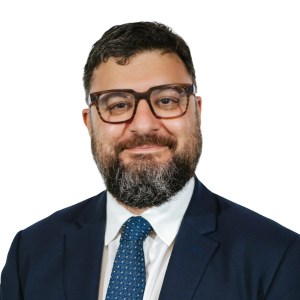
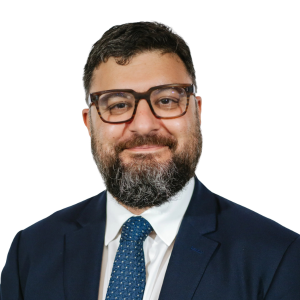 Vincenzo Rampulla, Director, WPI Strategy
 Vincenzo Rampulla is a Director at WPI Strategy having spent several years working on broadcasting and online safety policy at Ofcom and leading Smart Data investment at the Department for Business.
He brings a wealth of experience to WPI’s developing regulatory advisory service across a range of industries that will be key to Britain’s future growth prospects.
Vincenzo Rampulla, Director, WPI Strategy
Jamie MacColl, Senior Research Fellow, Royal United Services Institute (RUSI) Jamie MacColl is a Senior Research Fellow at the Royal United Services Institute. His current research focuses on ransomware and other financially motivated cybercrimes, the UK’s national cyber strategy, and risk management approaches to ‘high-risk’ ICT vendors. He is also currently a Senior Research Associate at Virtual Routes, a European think tank, a Project Fellow at the Research Institute for Sociotechnical Cyber Security, and a member of the technical committee Cyber Monitoring Centre. Jamie also represents RUSI at the Counter Ransomware Initiative’s private sector advisory panel. He holds an MPhil in International Relations and Politics from the University of Cambridge and BA in War Studies from King’s College London.
Jamie MacColl, Senior Research Fellow, Royal United Services Institute (RUSI)
 Pastora Valero, Senior Vice President of International Government Affairs, Cisco
 Pastora Valero is the Senior Vice President of Cisco’s International Government Affairs and leads government affairs activities in the Europe, Middle East, and Africa (EMEA), and Asia Pacific, Japan, and Greater China (APJC) regions. She manages a team of professionals who engage lawmakers, regulators, and industry stakeholders across both regions on technology and communications policies that can deliver the promises of a digital world. Pastora joined Cisco in 2003, and she has close to three decades of experience in regulatory and public policy issues concerning telecommunications, internet regulations, competition, and trade, among others. During her 19-year tenure at Cisco, she has successfully advocated for policies that foster the deployment of broadband networks, enable the future of wireless technologies, promote the green and digital transition, and enhance privacy and cybersecurity.
She is passionate about mentorship, talent development, and women’s leadership—serving as the executive sponsor for the Women of Cisco Community in EMEA—and is an advocate for the role of digital technologies in powering a more sustainable and inclusive future for all. She is also a member of Cisco’s Senior Leadership Team in EMEA and APJC and the country sponsor for Egypt, a key market for Cisco in the Middle East region.
Prior to Cisco, Pastora was Vice-President of Regulatory Affairs for Global TeleSystems (GTS), a pan-European fibre-optic network operator. She started her career with the Brussels law firm Van Bael & Bellis, dealing with EU trade and competition law issues.
A qualified lawyer in Spain, she holds a master’s degree in European law (ULB, Brussels) and an L.L.M in international law (VUB, Brussels). She serves on the Board of Directors of Digital Europe and has represented Cisco on boards of various technology trade associations that are active in the EMEA market, including serving as a former vice-chair of the American Chamber of Commerce to the EU.
Pastora Valero, Senior Vice President of International Government Affairs, Cisco



The Royal United Services Institute for Defence and Security Studies (RUSI) is the UK’s leading independent, not-for-profit research institute for security studies. RUSI a UK-registered charity and is politically and administratively independent of any government or funder. RUSI is a British institution but operates with a global perspective with offices in London, Brussels and Nairobi, and a presence in Tokyo and Washington. RUSI’s expertise is sought by governments, multilateral bodies, private-sector businesses and international organisations, with the Institute gaining a reputation for outstanding quality, objectivity and influence.
RUSI’s Cyber and Tech research group brings much needed research focus and capacity to support UK and international strategic responses to cyber security and technology challenges. The team conducts research and hosts events that develop a strong evidence base for policymakers and practitioners alike. The programme has a global outlook. Based in London, it leverages the RUSI network of staff and Associate Fellows and has grown a network of cyber security experts from the public sector, the private sector and academia. RUSI’s Cyber and Tech research is agenda is structured around the following themes: cyber strategy and statecraft; cyber threats and resilience; and disruptive technologies. The team focuses on different aspects of these themes depending on policy priorities at the time.

Since 1989, we have been delivering high-level policy conferences in Brussels, across Europe, and around the world. Whether working on our own events or carefully curating yours, we establish key connections and promote understanding of topical policy issues and legislation.
Our reputation is built on the delivery of effective, meticulously planned events that provide unique insights from the people behind the policy. Working closely with key stakeholders from all sides, our expert team develop conference programmes with impact, and provide first-class event logistics.